
In today’s interconnected world, communication across languages is more critical than ever. People travel, study, work, and collaborate internationally every day. However, language barriers can still create confusion and limit opportunities. This is where a GE translator becomes incredibly useful.
A GE translator is a digital translation tool powered by artificial intelligence (AI) and machine learning that can convert text, speech, or even images from one language to another instantly. These tools help people communicate across cultures, making international travel, business, and education more accessible than ever before.
This article explores how GE translator technology works, its features, benefits, limitations, and practical ways to use it effectively.
What Is a GE Translator?
A GE translator is an AI-based language translation system designed to interpret and convert spoken or written language in real time. It uses advanced algorithms, natural language processing (NLP), and machine learning models to understand context and produce accurate translations.
Unlike traditional translation dictionaries, modern digital translators can process multiple forms of input, including:
- Typed text
- Spoken language through voice recognition
- Text captured through a smartphone camera
- Audio recordings
- Real-time conversations
Because of these capabilities, translation tools have become essential for travelers, students, professionals, and language learners.
How GE Translator Technology Works
Behind the scenes, a GE translator relies on several advanced technologies that allow it to understand and translate languages quickly.
1. Artificial Intelligence and Machine Learning
Modern translators use AI models trained on millions of translated texts. These models learn patterns, grammar structures, and contextual meanings to improve accuracy over time.
2. Natural Language Processing (NLP)
NLP enables the software to analyze human language the way people speak or write it. This helps the translator understand context rather than translating word-for-word.
3. Speech Recognition
Voice input features allow users to speak into their device, which converts speech into text before translating it into the target language.
4. Optical Character Recognition (OCR)
Camera translation works through OCR technology. It scans printed or digital text and translates it instantly on the screen.
These technologies work together to create a seamless translation experience.
Key Features of GE Translator Tools
Most modern translation platforms include several features designed to make communication easier.
Real-Time Voice Translation
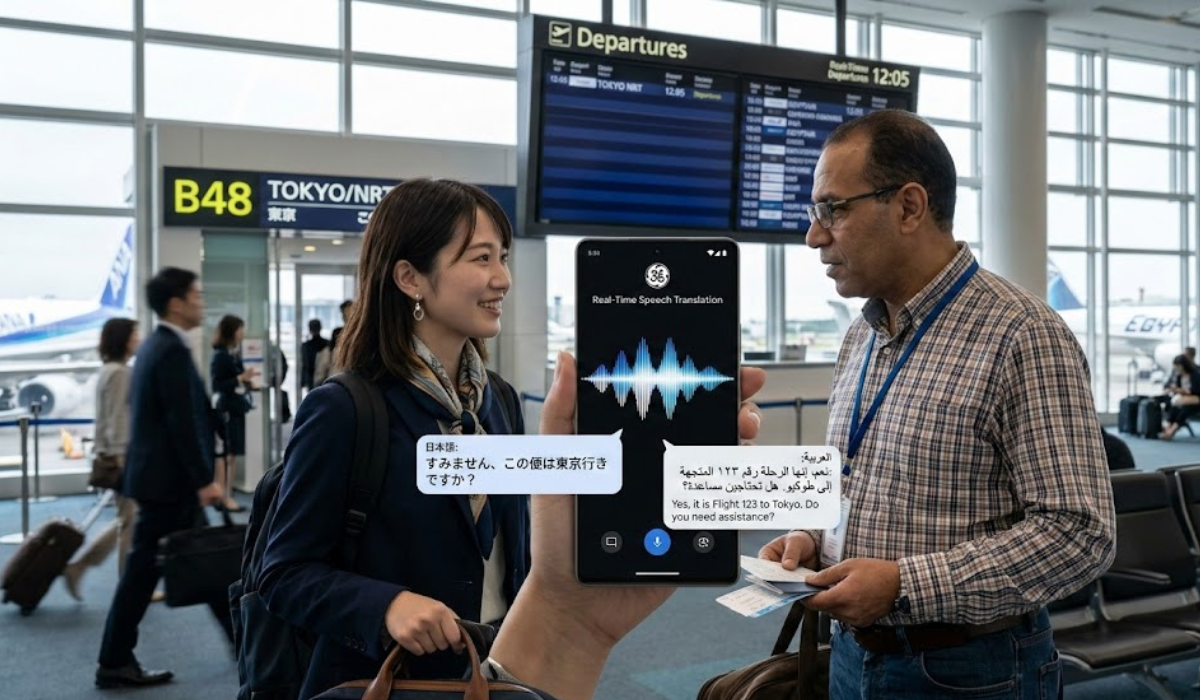
Users can speak directly into the app and receive instant translated speech or text. This is especially helpful for conversations while traveling.
Camera Translation
Pointing a smartphone camera at signs, menus, or documents allows the translator to detect and translate text automatically.
Text Input Translation
Typing sentences into the translator provides quick translations for emails, messages, or research.
Offline Mode
Some translation apps allow users to download language packs for use without internet access, which is useful when traveling in areas with limited connectivity.
Multilingual Support
Many translation tools support dozens or even hundreds of languages, enabling global communication.
Practical Uses of GE Translator Technology
Digital translation tools have become part of everyday life in many situations.
Travel and Tourism
Travelers often use translators to understand menus, directions, and local conversations. Camera translation can quickly translate street signs or restaurant menus.
International Business
Companies operating across borders rely on translation tools to communicate with partners, clients, and teams in different countries.
Language Learning
Students can use translation apps to understand vocabulary, pronunciation, and sentence structures while learning new languages.
Education and Research
Researchers and students often read articles or documents written in foreign languages. Translation tools help them access global information more easily.
Cultural Exchange
People connecting through social media or online communities can communicate despite speaking different languages.
Benefits of Using a GE Translator
The growing popularity of translation tools comes from the many benefits they offer.
Instant Communication
Translations happen almost immediately, making real-time conversations possible.
Increased Accessibility
People who don’t speak a foreign language can still travel, work, or interact internationally.
Cost Efficiency
Many translation apps offer free versions, which makes them accessible to anyone with a smartphone or computer.
Improved Global Collaboration
Businesses and organizations can collaborate across countries without needing professional translators for every interaction.
Convenience
Instead of carrying phrasebooks or dictionaries, users can rely on their mobile devices for instant translation.
Limitations of Translation Technology
Although GE translators are powerful tools, they are not perfect. Understanding their limitations helps users avoid misunderstandings.
Context Challenges
Some phrases or idioms have cultural meanings that AI may not fully understand.
Specialized Terminology
Legal, medical, and technical documents often require professional human translators to ensure accuracy.
Grammar Variations
Languages with complex grammar structures may not always translate perfectly.
Cultural Nuances
Certain expressions or tones may lose meaning during translation.
Because of these limitations, translation tools are best used as assistance rather than a complete replacement for human language expertise.
Tips for Getting Better Translation Results
Using translation tools effectively can significantly improve accuracy.
Use Simple Sentences
Short and clear sentences translate more accurately than complex ones.
Avoid Slang and Idioms
Slang expressions often confuse translation algorithms.
Speak Clearly for Voice Translation
Pronouncing words clearly helps speech recognition systems detect language correctly.
Double-Check Important Information
For professional or sensitive communication, reviewing translations or consulting a native speaker is recommended.
Experiment With Different Platforms
Different translation tools may produce slightly different results, so testing multiple options can help find the most reliable one.
The Future of AI Translation
Translation technology continues to evolve rapidly. Advances in AI and machine learning are improving the accuracy and speed of translation systems.
Future developments may include:
- More natural-sounding voice translation
- Improved contextual understanding
- Real-time translation in video calls
- Wearable translation devices
- More accurate cultural and idiomatic interpretation
These innovations could further reduce language barriers and enable more seamless global communication.
Why Translation Technology Matters
Translation tools like GE translator represent more than just software. They symbolize humanity’s desire to connect across cultures and languages.
For centuries, language differences limited travel, trade, and understanding. Today, digital translation tools help people communicate instantly across continents.
From international friendships to global business partnerships, translation technology helps create opportunities that once seemed impossible.
However, technology alone cannot replace cultural understanding. True communication still requires empathy, curiosity, and respect for different cultures.
Conclusion
A GE translator is a powerful AI-driven tool that makes communication across languages faster and easier than ever before. By combining artificial intelligence, natural language processing, voice recognition, and camera translation, these tools allow people to interact in real time regardless of language differences.
Whether you are traveling abroad, learning a new language, or working with international colleagues, translation technology can open doors to new experiences and connections.
While these tools are not perfect for specialized content, they excel in everyday conversations and general communication. When used thoughtfully, they help bridge cultural gaps and make the world feel more connected.
As technology continues to advance, translation tools will likely become even more accurate and accessible. The ability to communicate across languages is no longer a distant dream—it is a practical reality available in the palm of your hand.
FAQs About GE Translator
1. What is a GE translator used for?
A GE translator is used to convert text, speech, or images from one language to another instantly using artificial intelligence.
2. Is GE translator accurate?
It is generally accurate for everyday conversations and common phrases, but it may struggle with complex or specialized terminology.
3. Can a GE translator work offline?
Some translation tools offer offline language packs, allowing translations without an internet connection.
4. How many languages can a GE translator support?
Most modern translation platforms support dozens or even hundreds of languages depending on the software.
5. Is translation technology replacing human translators?
No. While translation tools are helpful for everyday communication, professional translators are still needed for legal, medical, and technical content.